
MEDICAL KARMA
COMORBIDITIES OF UNCONTROLLED DIABETES AND HYPERTENSION
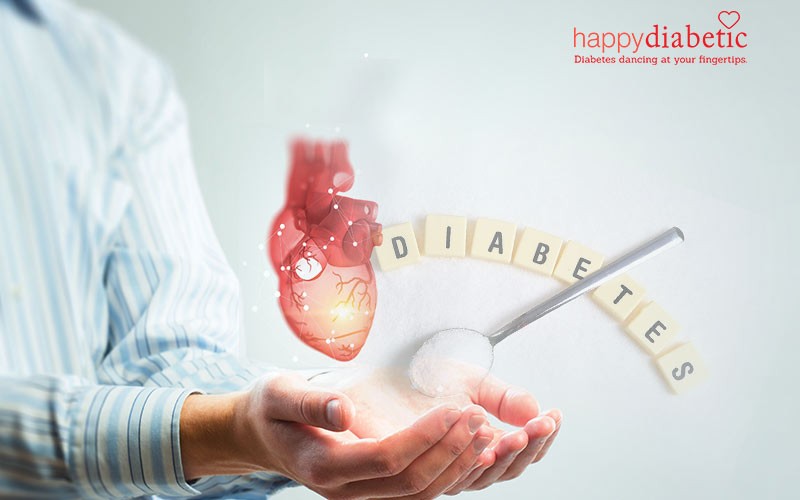
Multimorbidity is now the norm for people with chronic disease
I do not have access to any data, but I believe one in every two - four patients seen in primary care (dispensaire) has multimorbidities, and one of the most common comorbidity is often diabetes, in addition to hypertension, cardiovascular disease (CVD- ‘malade le coeur’).
‘Comorbidities have a significant impact on both the quality and length of life in people with diabetes. Individuals with comorbid diabetes require individually tailored care with the patient at the centre of the decision-making process to optimise outcomes’- THIS IS WHAT THE UK GUIDELINES SUGGESTS, and it is being implemented there.
Now, coming back to Paradise island:
1. How many patients, their relatives and health care professionals know or realise that uncontrolled health conditions, eg Diabetes, Hypertension, etc. reduces the number of years that you will survive in this planet. In simple terms, the more number of years you live with uncontrolled blood glucose, uncontrolled hypertension lesser of years, your will live. Meaning, the more uncontrolled diabetes and hypertension you have or the greater number of years of uncontrolled diabetes or hypertension you have, the sooner you will die (premature mortality increases). This was in terms of length of life.
2. How about the quality of life?
Same principles, the longer you have uncontrolled diabetes and hypertension, the poorer is your quality of life. And Mauritius is best exemplified by the rate of complications, the demeaning quality of life, both for the patients and the family, the exorbitant financial strain buying expensive medication, inability to work, either due to blindness due to eye complications, foot amputation, reduced exercise ability due to heart diseases and heart attack or simply being bed bound/wheelchair bound due to amputation or stroke. ( Ask me for it and I will show you several examples of what the people are going through and what their quality of life is).
Here, people are running amock, findings who is the best heart, kidney, eyes or foot doctors, spending a fortune both in terms of investigations and procedures, clinic admission and consultation fees, with some have successful, others partially successful and many others with unchanged outcomes.
What most of you are not realising that, you are simply treating the side-effects, symptoms or complications of years of uncontrolled diabetes and hypertension. You were not bothered because, you felt that these uncontrolled conditions, causes you no symptoms, that these conditions were ‘tou bon’, or ‘li bien controlle’, when yourself, have no clue of what ‘bon control’ is or means, or what a good control value/range is and simply because you were not aware nor were told what the implications of inadequate control can lead to.
You also do not realise that seeking help for these already developed complications, which, potentially could have been avoided or delayed, is not going to make a lot of difference in the quality of your life or the longevity, as the damage is already done. (Even if you do seek help, you still are given sub-optimal care, as there is resistance to refer you to the best physician to help with that particular issue and I have seen and continue to see several examples ( dans morice, tou specialist dans tou zafer) or you are referred to someone with the same cultural background or to someone in their own friend’s circle, or you as the patient, would seek help from someone of you own ancestral background, knowing that, you may or could potentially get better and the best care somewhere else.
Indeed you are the master of your own destiny and you stand best to figure out what is best for you.
It is like the tree, whose roots, for years, has slowly been getting affected and you did nothing about it, or did minimal things to get it sorted, and now when the trunk and the branches are getting rotten and dying, that you start seeking help, here and there. You are seeking help now as you can see the damage it has caused, but you could not or did not see the years of unhealthy condition in which the roots were living or surviving.
This is called ‘MEDICAL KARMA’.
Is the THE PATIENT AT THE CENTRE OF THE DECISION-MAKING PROCESS to optimise outcomes? Are the patients involved in the care that they receive? Are the patients given the opportunity to be involved in their care? Are the patients asked what they believe or think is in their best interest (or are they simply told, sometimes not even that?). Are the patients told what different options they have for their treatment? Are the patients given the opportunity to choose between the different options in the management of their conditions?
(This is not a generalisation or blanket rule here. There are some very good clinicians).
What are the other side of the coin now!
Are the patients interested in knowing what problem they have? Are the patients interested in what the diagnosis of their medical symptoms are? Do they know exactly what their clinical condition is? Do they know the exact diagnosis of their problem? Do they ask questions to genuinely find out what the problem is? Do they know what medications they take? Do they know why they take the medications and for what condition? Do they know the clinical parameters that they need to monitor at home and how often? Do they ask questions about why certain investigations or tests are being requested and what is the clinician looking for in it? And the list of questions goes on…
Just few points for you to ponder!
By Dr. Iswaraj Ramracheya

Fast Delivery
Call us for delivery dates.

Cash Payment
Pay cash on delivery.

Shop with Confidence
Our Buyer Protection covers your purchasefrom click to delivery.

24/7 Help Center
Have a question? Call a Specialist on 465 5777.

- Address: 3rd Floor, The Core Building Ebene
- Phone: (+123) 465 5777 / 468 1541
- Email: info@happydiabetics.mu
Discover Restaurants, coffee shops and Bars in Mauritius on Anou Manzer Click Here